Wells Fargo’s Home Lending Business Faces Challenges
Wells Fargo, the United States’ fourth-largest bank, has been grappling with challenges in its home lending business for a few years, as highlighted by CEO Charlie Scharf’s recent remarks. His comments raise the question of whether the bank will consider additional restructuring steps. Despite the issues in Wells’ residential mortgage unit, the bank’s cards and auto lending businesses appear to be picking up steam.
CEO’s View on Home Lending Business
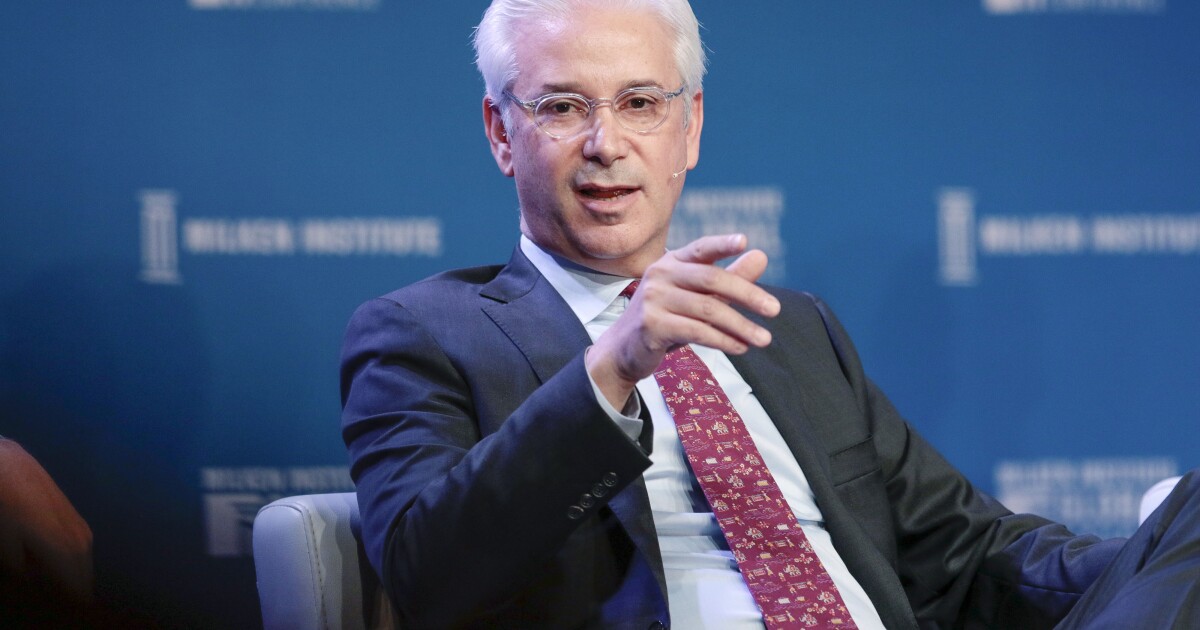
During his appearance at the Goldman Sachs Financial Institutions Conference in New York, Scharf expressed dissatisfaction with the performance of the home lending division, describing the unit’s returns as “subpar.” According to Scharf, “We think when we look at every one of our businesses, I would say with the exception of our home lending business, we have opportunities to grow profitability based on both returns and higher growth — and just competing.”
The home lending group “is still transitioning to a much smaller business with higher profitability,” the CEO noted. This observation comes nearly three years after the San Francisco-based bank announced plans to downsize its residential mortgage operation. Since the announcement of this strategic shift, Wells Fargo has seen a significant reduction in its home lending business.
Shift in Mortgage Lending Strategy
In January 2023, Wells Fargo declared its intention to move from a nationwide mortgage lending strategy to a more focused approach, concentrating on the bank’s customers and underserved markets. This move resulted in a considerable decrease in the size of the bank’s home lending business. At the end of 2022, its residential mortgage portfolio totalled $222.5 billion, a decline of 10%. Mortgage originations, which were $14.6 billion in the fourth quarter of 2022, fell to $7 billion in the three months ending September 30, 2025.
The decline is even more striking when compared with pre-pandemic levels. Wells Fargo’s mortgage originations for the quarter ending September 30, 2019, were $58 billion. Following Scharf’s comments, a spokesperson for the bank declined to provide details on whether the company is considering additional restructuring steps.
Industry-Wide Trend
Wells Fargo’s downsizing is part of a broader trend, with several large U.S. banks scaling back home lending or exiting the space altogether in recent months. This list includes Popular in San Juan, Puerto Rico; WaFd in Seattle; and Ally Financial. However, Wells’ downsizing is particularly noticeable given its high profile as the country’s fourth-largest bank and its long-standing position as the banking industry’s top home lender.
Positive Developments in Other Sectors
Despite the weaker performance in home lending, Scharf noted that Wells’ overall consumer prospects appear to be promising. He pointed out that household spending remains resilient, and investments in the auto lending and cards businesses have begun to show positive results. He stated, “The consumer continues to spend, delinquencies are probably marginally better than they were the last time we talked publicly about it, deposit balances are strong, investment balances are strong.”
The bank is witnessing increased levels of card issuance, and in auto lending, it was recently named the U.S. financing partner for both Volkswagen and Audi. Steven Alexopoulos, an analyst who covers Wells Fargo for TD Cowen, noted in a research note, “The consumer bank is showing improving momentum, supported by maturing investments and steady progress across card and auto. Home lending remains an exception.”
Source: American Banker