Communications Workers of America Continue Efforts to Unionize Financial Services Industry
The Communications Workers of America (CWA) is pushing forward in its multiyear endeavor to organize workers in the financial services sector. According to the CWA’s lead organizer, there has been a significant rise in union interest from employees across several major banks. This shift represents a change in workers’ perception of unions, with labor-relations lawyer Trecia Moore noting, “This is not your grandpa’s union. People think it’s cool to be in a union.”
Beneficial State Bank Reaffirms its Commitment to Union Contracts
Beneficial State Bank in Oakland, California, became the first U.S. bank in several decades to agree to a union contract, renewing its collective-bargaining agreement with the CWA. This move signals a significant evolution in the banking sector. As part of the second union contract, the bank is offering its employees a pay increase, more generous retirement benefits, and a considerable bonus.
The initial pact with the CWA was negotiated by Beneficial State in 2021, marking the first time since the mid-1960s that a U.S. bank consented to a union contract. This historical agreement, according to Nick Weiner, senior campaign lead for the CWA’s Committee for Better Banks, demonstrates a shift in the banking industry towards better worker rights and benefits.
Details of the New Union Contract
The renewed union contract, announced recently, promises an average 9% general wage increase in 2026, a $2.50 hourly wage differential for employees who can conduct business in Spanish, and an increased employer match for 401(k) contributions. Additionally, most employees will receive a one-time bonus averaging $4,805.
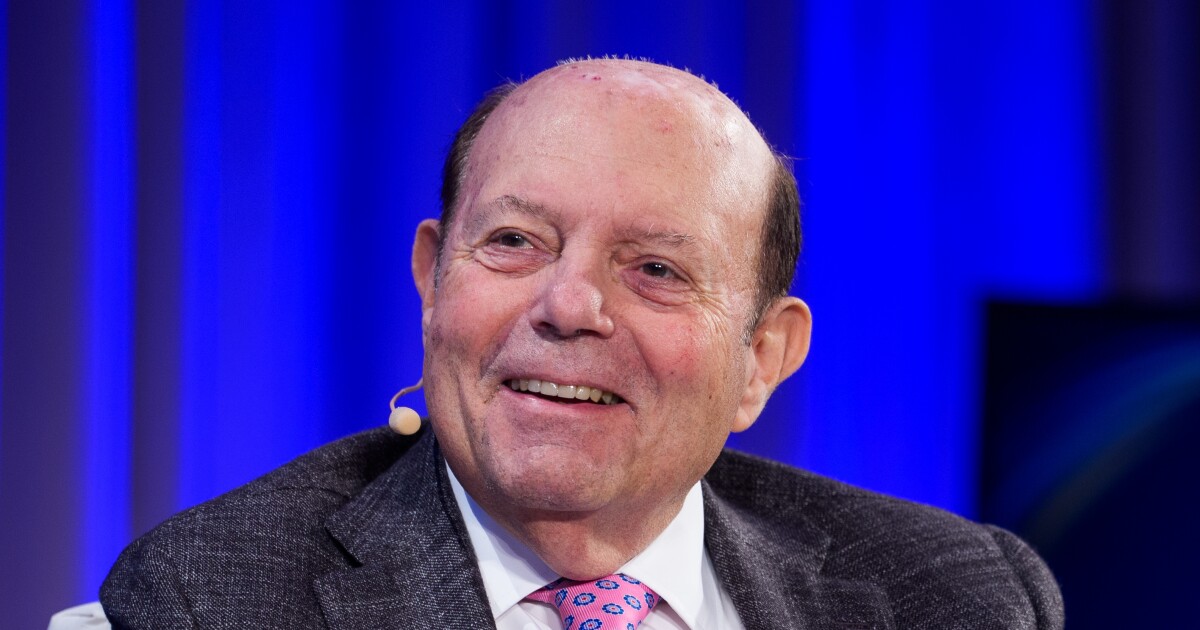
“We believe that empowering workers is what creates a strategic business advantage,” Beneficial State CEO Randell Leach said in a statement. “Leadership, management capabilities, organizational culture and even union representation can all play a factor positively or negatively in employee satisfaction and productivity. The bottom line is banks don’t have to choose between profitability and worker empowerment, but they must choose to engage their employees if they want to harness the potential of their workforce,” Leach added.
Banking and Unionization: A Growing Trend?
Beyond Beneficial State, the CWA has also achieved a collective-bargaining agreement with the Genesee Co-op Federal Credit Union in Rochester, New York. However, at other financial institutions — most notably Wells Fargo — union organizing efforts have met with resistance, forcing the CWA to employ more localized tactics.
“We’ve gone through a process to have elections at different branches site-by-site, because that’s where workers know each other and can more quickly organize and win their elections,” Weiner explained. “It’s adapting a different strategy based on the circumstances.”
Despite opposition from company management, over two dozen Wells Fargo branches have voted to unionize since 2023. Negotiations are underway at other Wells Fargo branches, and the union has received inquiries from employees at several other large institutions.
Challenges in Unionization Efforts
While the CWA is striving to educate financial-services workers about the essentials of organizing and collective bargaining, it faces resource constraints in running simultaneous campaigns at multiple banks. “Unfortunately, we’re a relatively small team,” Weiner said, referring to the CWA’s Committee for Better Banks. “We’ve had more interest from workers at different banks than we’re able to give them the time, energy and resources they deserve.”
Historically, workers in banking and finance “didn’t really see themselves as stereotypical union members,” but those traditional attitudes are changing, according to Trecia Moore, a partner at the law firm Husch Blackwell in Kansas City.
Despite concerns about banks employing anti-union efforts, Moore believes the National Labor Relations Board has made the organizing process easier for employees in recent years. “I don’t think the unions are having a difficult time,” Moore said. “It’s been very easy for employees to organize a union and for unions to win elections.”
Source: Here