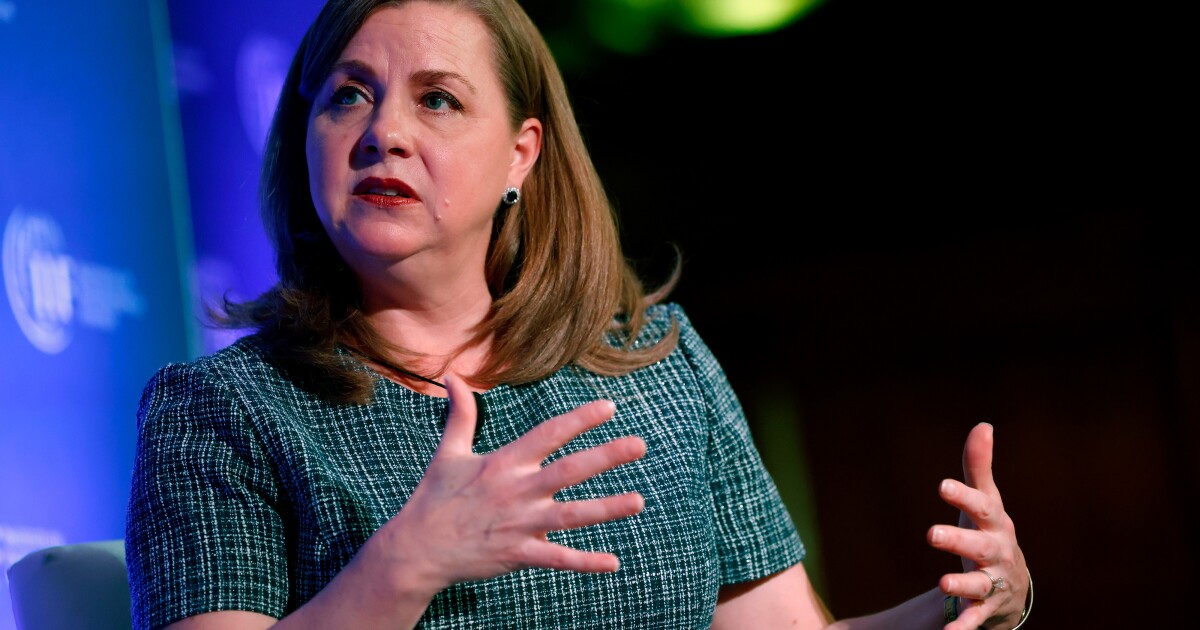
Federal Reserve Vice Chair Puts Forth Regulatory Relief for Community Banks
The Federal Reserve’s top banking regulator, Michelle Bowman, has recently outlined several regulatory priorities that could potentially ease the burden on community banks. Bowman, in her speech at an event hosted by the California Bankers Association, has indicated a need for change within the central bank’s regulatory framework. This reflects her commitment to redesigning supervisory practices to better align with the unique needs and risks of different types of banking institutions.
A New Approach to Banking Oversight
One of the key changes that Bowman is considering is the separation of community bank oversight from the supervision of larger and midsize banks. In her role as the Fed’s community bank representative, Bowman has voiced concerns that the current practice of categorizing banks solely based on asset size is imprecise and requires reconsideration.
“Many of these portfolios rely on only a single, fixed asset level, like the definition of a community bank at $10 billion or a large bank at $100 billion,” Bowman said. She pointed out that such definitions fail to account for a bank’s business model, activities, or risk profile, as well as economic growth and inflation over time.
Adjusting Regulatory Thresholds
Bowman is also advocating for an update in asset thresholds that have not kept pace with economic realities. She suggests a more nuanced approach, stating, “Looking ahead, we will reconsider these regulatory thresholds and will work to support Congress in updating thresholds that have become outdated and too low relative to the broader economy.”
Her proposal includes adjusting thresholds according to nominal GDP, which takes into account both economic growth and inflation. This, she believes, would result in a more robust and resilient system over time.
Tailored Supervision for Community Banks
The Fed Vice Chair is forwarding the idea of more tailored supervision for community banks. This involves developing an oversight program distinct from those used for larger and regional banks. Bowman believes that the supervision of community banks should reflect their size, business activities, and the risks they pose to U.S. financial stability.
“Community banks should be subject to strict supervisory oversight, but it must be commensurate with their smaller size, simpler business activities, and the modest risks they pose to U.S. financial stability,” Bowman said.
Modernizing Reporting and Application Requirements
The top regulator is also pushing for modernization of reporting and application requirements for community banks. Bowman recognizes the disproportionate burden that quarterly bank call reports can impose on smaller institutions. She suggests that collecting less data could help regulators focus on the most meaningful information.
“This certainly is a departure from recent regulatory approaches, in which more is always better,” Bowman said. “But collecting less information can help ensure we are focused on the right and most valuable information.”
Since stepping into her role as the Fed’s top regulator in mid-June 2025, Bowman has moved to streamline parts of the central bank’s supervisory framework. Through initiatives like an October memo directing staff to focus on the core mission of ensuring safety and soundness in the banking system, Bowman shows her commitment to a more pragmatic and focused regulatory approach.
While some critics have expressed concern about potential risks, the moves signal a clear drive towards more tailored, efficient, and context-sensitive bank regulation. As the Federal Reserve continues to evolve its approach, the implications for banks of all sizes – and the wider economy – will be keenly watched.
Source: Here