Understanding the Complexity of Payment Processing
Payment processing, whether in-store or online, happens so quickly that it seems effortless. But as many merchants know, there’s a lot going on behind the scenes to keep payments moving without friction. In this article, we’ll cover the fundamentals of payment processing, outline the players involved, and discuss the technology behind it all.
Key Players in the Payment Ecosystem
When a payment is made, several entities work together to complete the transaction:
- The cardholder – The customer initiating the purchase.
- The merchant – That’s you—the business requesting the funds.
- The card networks – Visa, Mastercard, American Express, and Discover set transaction rules, manage infrastructure, and determine interchange rates.
- The issuing bank – The customer’s bank (the one that gave them the card).
- The acquiring bank – Your bank. They hold your merchant account and take on the risk of your transactions.
- The payment processor & gateway – The technical “middlemen.” The gateway encrypts the data at the point of sale, while the processor routes that data between the various banks and networks.
With hundreds of terms specific to payment processing, things can get confusing. Reference this Payments Dictionary for a simplified overview.
How a Card Transaction Actually Works
A card payment might feel instant, but it goes through several distinct steps before money lands in your account.
Step 1: Authorization
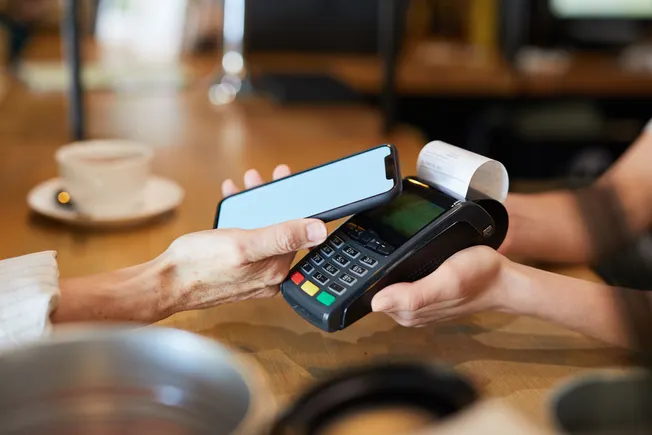
The first step is when the transaction is initiated. The customer taps a card, inserts a chip, or enters their details online. The payment gateway encrypts the data and sends it to the processor. Then, the request travels through the card network to the issuing bank. The issuing bank checks for available funds, transaction legitimacy, and approves or declines the payment accordingly.
Step 2: Authentication
If the payment is made online, an extra layer of authentication is required. Tools like 3D Secure ask the customer to verify the purchase using a one-time code, biometric, or banking app to ensure the buyer is the actual cardholder.
Step 3: Clearing
Approved transactions are grouped together and sent through the card networks in batches. During clearing, networks calculate fees and route transaction details to the correct banks.
Step 4: Settlement
Settlement is when the money actually moves. The issuing bank releases funds to the acquiring bank after deducting interchange fees, which are then deposited into your merchant account.
Acquirer vs. Processor: What’s the Difference?
Acquirers and processors serve different purposes in the payment flow. The acquiring bank provides your merchant account and manages financial risk, while the processor handles data routing, fraud checks, and technical connections.
Where the Payment Gateway Fits In
A payment gateway captures payment details, encrypts them, and securely transmits the data from your POS system or website to the payment processor. It acts as a control layer, balancing speed, security, and compliance for seamless transactions.
- Secure data capture
- PCI compliance support
- Tokenization and vaulting
- Fraud detection and controls
Fees in Payment Processing
Processing fees come from multiple players, including interchange fees, assessment fees, processor and gateway fees, authorization fees, monthly minimums, and PCI non-compliance fees.
Interchange fees account for the largest cost and are paid to the issuing bank for transaction risk.
Markup and Pricing Models
Payment providers structure their markup in various ways, including blended pricing, interchange-plus pricing, membership pricing, and tiered pricing. Each model offers different levels of transparency and cost-effectiveness for businesses.
Conclusion
Payment processing directly impacts cash flow, customer experience, and margins. Understanding the entities involved, transaction flow, and fee structure allows businesses to make informed decisions and build a payments setup that aligns with their needs.
Source: Here