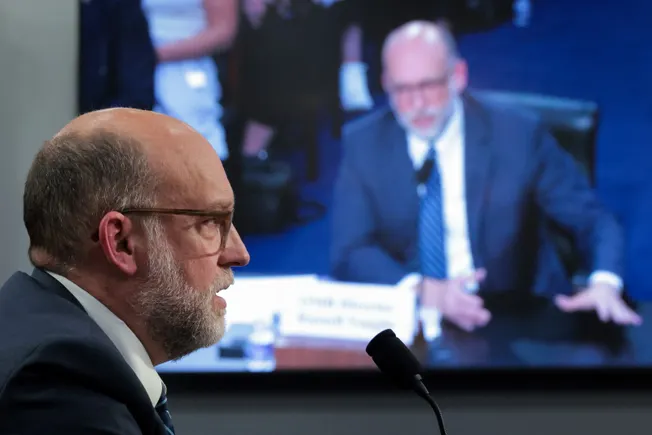
The Consumer Financial Protection Bureau Transfers Active Litigation to the Justice Department
The Consumer Financial Protection Bureau (CFPB) has made a significant announcement regarding the transfer of all its active litigation to the Justice Department. This decision has been confirmed by statements from Sen. Elizabeth Warren, D-MA, and the workers union representing the agency.
Details of the Transfer
According to Mike Salemi, the CFPB’s acting enforcement chief, all bureau employees are expected to be furloughed at the end of the year. Salemi mentioned that the information came from an associate general counsel at the Office of Management and Budget who also serves as a senior legal adviser at the CFPB.
This timeline aligns with a projection made by CFPB Acting Director Russ Vought in a recent podcast appearance. Vought indicated that only Republican appointees and a few career staff would remain at the bureau to handle statutory responsibilities as the agency closes down.
Financial Challenges and Legal Proceedings
The DOJ recently filed paperwork with the U.S. District Court for the District of Columbia, stating that the CFPB anticipates exhausting its available funds in early 2026. This filing was made to address a potential lapse in appropriations for the bureau’s operating expenses.
Furthermore, Salemi mentioned that 170 employees in his division are set to be placed on unpaid leave. Despite this, a few top officials may have the opportunity to work for the DOJ, as reported by American Banker.
Union Response and Legal Authority
President of the National Treasury Employees Union 335, Cat Farman, expressed concerns over Vought’s decision to transfer the bureau’s cases to the DOJ. However, the Dodd-Frank Act grants the DOJ the authority to handle cases when no other agency is designated to do so by law.
Farman highlighted that the CFPB is currently litigating 13 cases, despite Vought dismissing 22 enforcement actions brought by the bureau under previous administrations. There are concerns that the DOJ may also dismiss the remaining cases.
Response from Officials and Legal Experts
While the DOJ declined to comment on the matter, Sen. Elizabeth Warren raised suspicions about the motives behind the CFPB’s actions. Warren emphasized the importance of upholding the law in the face of attempts to shut down the bureau.
Legal experts have pointed out that the DOJ’s involvement in handling cases where no agency is designated has precedence, as seen with the Servicemembers Civil Relief Act prior to the establishment of the CFPB.
Conclusion
The recent developments at the CFPB, including the transfer of active litigation to the DOJ and the potential furlough of employees, have raised concerns among stakeholders. The legal implications of these actions and the future of the bureau remain uncertain as the situation continues to evolve.
The Impact of Technology on Society”
Technology has become an integral part of our daily lives, shaping the way we communicate, work, learn, and interact with the world around us. From the invention of the wheel to the development of smartphones and artificial intelligence, technology has continuously evolved and revolutionized the way we live. While the benefits of technology are undeniable, there are also concerns about its impact on society. In this article, we will explore the various ways in which technology has influenced society, both positively and negatively.
One of the most significant impacts of technology on society is the way it has transformed communication. With the advent of the internet and social media, people can now connect with each other instantly, regardless of their location. This has led to a more interconnected world, where information can be shared at the click of a button. However, this constant connectivity has also raised concerns about privacy and security, as personal information is now more vulnerable to hacking and surveillance.
Technology has also revolutionized the way we work. With the rise of automation and artificial intelligence, many jobs that were once done by humans are now being performed by machines. While this has led to increased efficiency and productivity, it has also resulted in job displacement and a widening wealth gap. As technology continues to advance, it is crucial for society to adapt and retrain the workforce to ensure that everyone can benefit from these technological advancements.
In the field of education, technology has also had a profound impact. Online learning platforms and educational apps have made learning more accessible and flexible, allowing students to learn at their own pace and in their own time. However, there are concerns about the digital divide, where students from low-income backgrounds may not have access to the same technology as their wealthier counterparts. It is important for policymakers to address this issue and ensure that all students have equal access to educational opportunities.
Another area where technology has had a significant impact is healthcare. From telemedicine to wearable devices that track our health, technology has made it easier for people to monitor their well-being and seek medical advice remotely. However, there are concerns about the ethical implications of using technology in healthcare, such as the potential for data breaches and the misuse of personal information. It is crucial for healthcare providers to prioritize patient privacy and security when implementing new technologies.
While technology has brought about many positive changes in society, there are also negative aspects that need to be addressed. One of the most pressing concerns is the impact of technology on mental health. With the rise of social media and digital devices, many people are experiencing increased levels of stress, anxiety, and depression. It is important for individuals to practice digital detox and set boundaries with technology to protect their mental well-being.
In conclusion, technology has had a profound impact on society, shaping the way we communicate, work, learn, and interact with the world around us. While there are many benefits to technology, such as increased connectivity and efficiency, there are also concerns about its impact on privacy, job displacement, and mental health. It is crucial for policymakers, businesses, and individuals to address these concerns and work towards a more equitable and sustainable use of technology in society. By harnessing the power of technology responsibly, we can create a more inclusive and prosperous future for all.