Macroeconomic Conditions Impact Fintech IPOs
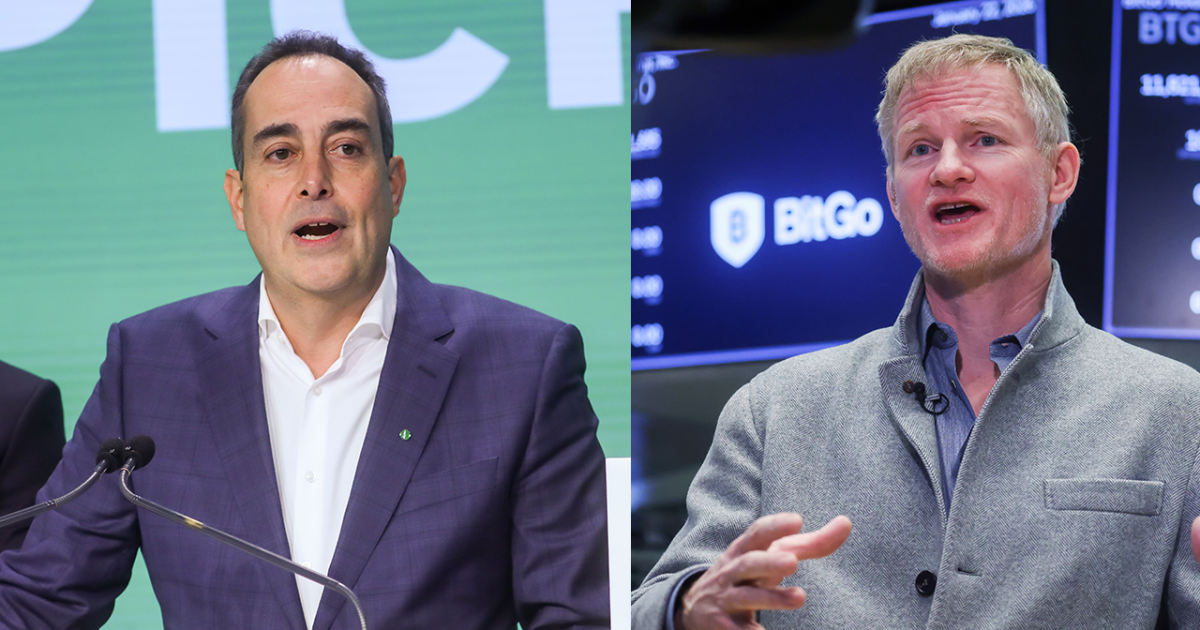
The year 2026 kicked off with two significant fintech initial public offerings (IPOs), with digital asset custodian BitGo and Brazilian digital bank PicPay both going public. Despite a robust start, their performance was subsequently affected by macroeconomic conditions, including a temporary partial government shutdown in the United States.
BitGo and PicPay’s Initial Success and Subsequent Decline
BitGo and PicPay, two major players in the fintech industry, made their respective debuts on the New York Stock Exchange (NYSE) and Nasdaq in January. BitGo set its offering price at $18 per share, higher than the anticipated range of $15 to $17, while PicPay priced its IPO at $19 per share, the top of its range of $16 to $19.
Investors showed significant interest in these offerings, raising $212.8 million for BitGo and $434 million for PicPay. However, despite the initial enthusiasm, both companies faced a downturn in the days following their IPOs.
Contributing Factors to the Market Volatility
Several macroeconomic factors contributed to the volatility of the fintech IPO market. For one, the Federal Reserve’s decision to maintain steady rates amid elevated inflation led to market instability. Furthermore, a partial government shutdown in the U.S., which started on January 31, added to the uncertainty and volatility.
During the shutdown, the Securities and Exchange Commission (SEC) reduced its operations, mirroring its response to the 2025 full government shutdown that lasted a record-breaking 43 days. This reduction in operations impacted the market and added a layer of uncertainty to the IPO process.
Josh Bonnie, co-head of Simpson Thacher’s global capital markets practice, stated that SEC staff worked with several IPO issuers to finalize registration statements before the shutdown occurred, allowing these companies to move forward with their IPOs despite the shutdown. This proactive approach helped keep the IPO market open in the short term.
Expert Insight on the Fintech IPO Market
“The partial government shutdown has increased near-term uncertainty and contributed to volatility, but investor demand for quality issuers remains,” said Cristiano Dalla Bona, co-head of North America equity capital markets for Mergermarket. Dalla Bona indicated that broader risk sentiment and liquidity conditions, rather than issuer fundamentals, were driving short-term price movements.
Despite this challenging environment, experts believe there are still opportunities for companies planning an IPO in early 2026. For instance, Aisha Chandraker, head of fintech research for CB Insights, highlighted that fintech IPOs overall outpaced broader market activity last year. She mentioned the success stories of Nubank, which went public in 2021, and Revolut, which has remained private.
Thus, while the fintech landscape may be complex and dynamic, the potential for successful IPOs remains, despite the macroeconomic conditions and the recent partial government shutdown in the US.
For further information on the recent fintech IPOs, click Here.