In today’s rapidly evolving digital landscape, the marketing funnel, once a cornerstone of marketing strategy, is increasingly becoming obsolete. For years, marketers have relied on this model, structured around awareness, consideration, and conversion, to shape their strategies and account for customer behaviour. While this model is straightforward and easily understood, it no longer accurately represents the way customers make purchasing decisions.
With the advent of 2026, the traditional linear progression of customer behaviour from awareness to purchase is increasingly disconnected from the complex reality. The old funnel model presupposes that customers move in a clear-cut, pre-established sequence. However, in reality, consumers are no longer following a straight path from awareness to purchase. Instead, they are navigating multiple platforms, backtracking, and making snap decisions.
Despite this shift, many organisations are still structuring their marketing strategies around a linear funnel designed for a bygone era of media, tracking and consumer behaviour. As a result, they are applying outdated strategies to a rapidly evolving landscape and falling short of their objectives.
It’s time for marketers to face the harsh reality: the marketing funnel is not just broken, it’s obsolete. The traditional slow-nurture playbook is no longer effective in today’s fast-paced digital landscape.
The slow nurture playbook has expired
Several structural shifts have rendered the marketing funnel ineffective. Privacy changes have undermined tracking and remarketing efforts, email engagement is on a downward trend, and the fragmentation of customer journeys across multiple devices and platforms has made attribution increasingly unreliable.
At the same time, consumers are making decisions more quickly than ever before. Tools for product comparison, calculators, and access to product information and reviews are readily available, enabling consumers to form decisions even before a marketing campaign has had a chance to take effect.
Brands are now faced with the challenge of capturing consumer intent, which can emerge and vanish in an instant. If a brand’s marketing efforts are unable to capture this intent at the right moment, they risk losing potential customers to faster-moving competitors.
The customer journey didn’t bend. It broke
The traditional marketing funnel is based on the assumption that audiences go through three core stages: brand awareness, consideration, and conversion. However, this model no longer accurately represents consumer behaviour.
Today’s consumers research products across multiple platforms and devices at the same time. They flit between sources, compare alternatives, and revisit their decision-making process before finalising their purchase.
Take for example, a customer researching a credit card. They might see an ad on TV, Google the offer on their phone, compare offers on multiple tabs, watch a brief explainer video on social media, and read a few reviews. This entire process can happen within a matter of minutes, hours or days, defying the neat, linear progression imagined by the traditional marketing funnel.
Research by the Boston Consulting Group (BCG) supports this observation, showing that modern customer journeys are fragmented and non-linear, with consumers constantly hopping between behaviours such as searching, scrolling, streaming, and shopping. BCG has proposed a new framework to replace the traditional funnel: influence maps. Rather than focusing on what stage a customer is at, this strategy identifies the touchpoints that influence their decisions, as influence can happen at any point.
Every touchpoint now has to pull its weight
Despite the obsolescence of the traditional marketing funnel, some marketers are still clinging to it. However, this old playbook does not account for the new era of marketing, in which any interaction with a potential customer could be the decisive moment at which they choose to convert.
In this new landscape, every touchpoint must serve a triple function: educating, persuading, and converting. Essentially, if a single interaction with your brand cannot take a customer from “I’ve never heard of you” to “take my money”, then you’re falling behind.
This doesn’t mean that every ad needs to be aggressive. Instead, it means that every interaction needs to be capable of supporting a decision should the customer be ready to make one. If the necessary information is not readily available, customers will move on, and in the digital marketplace, this can happen in a matter of seconds.
Why banks need to rethink acquisition
Financial services is one industry that is particularly affected by this shift in consumer behaviour. Traditionally, banking relied on long decision cycles and strong brand familiarity. Consumers often spent weeks researching mortgages, loans or credit cards before choosing a provider.
However, much of this research now happens online in concentrated bursts. Prospective borrowers might visit different lender websites, comparison platforms, consumer reviews and social media explainers in a single day. As a result, the battle for customer acquisition is often won or lost before the bank ever has a chance to interact with the customer.
For banks competing with digital-first challengers and fintechs, this necessitates a significant shift in acquisition strategy. Rather than trying to guide prospects down a predefined path, they must now aim to influence customers and capture intent wherever it emerges.
From funnel stages to influence systems
This is where the concept of influence maps comes into play. Rather than structuring marketing around funnel stages, organisations need to identify the touchpoints that truly influence customer decisions and focus their investment there.
For financial institutions, this might mean enhancing digital product pages, improving educational content, or investing more heavily in channels where customer intent is already present, such as search and comparison platforms.
The goal now is to build a marketing system that can influence and convert customers wherever they encounter your brand. This involves designing marketing strategies that can convert within a single interaction, creating richer and more persuasive digital experiences, aligning messaging across all customer touchpoints, and investing in channels where customer intent is already present.
In short, marketing should be designed as a comprehensive customer acquisition system, rather than a sequence of isolated campaigns.
The marketing funnel was a useful model for a past era, but consumer behaviour has since evolved at a faster pace than marketing frameworks. Today’s consumer journeys are chaotic, rapid, and span multiple channels. Consumers constantly switch between platforms, sources and devices, gathering information and making decisions far more quickly than most marketing strategies account for.
2026 may well be the year that many marketers realise they’ve been adhering to an outdated model – a funnel designed for a consumer that ceased to exist years ago – while the most successful brands are those that are influencing buyers wherever and whenever intent emerges.
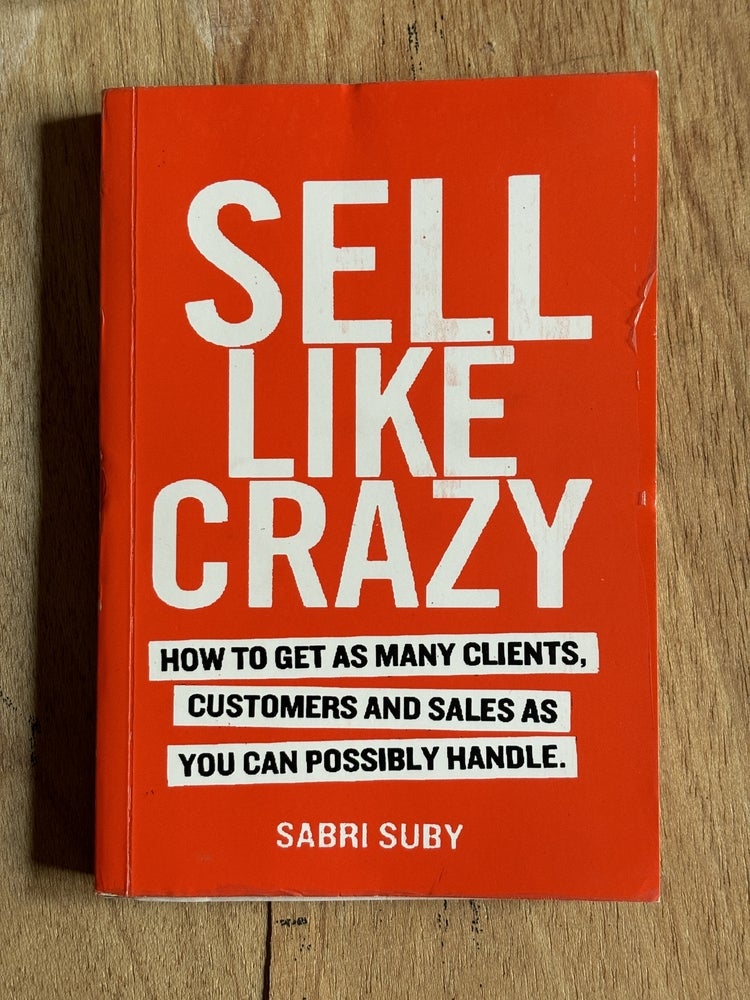
Sabri Suby is the founder of Australia’s fastest-growing digital marketing agency, King Kong.
Source: Retail Banker International