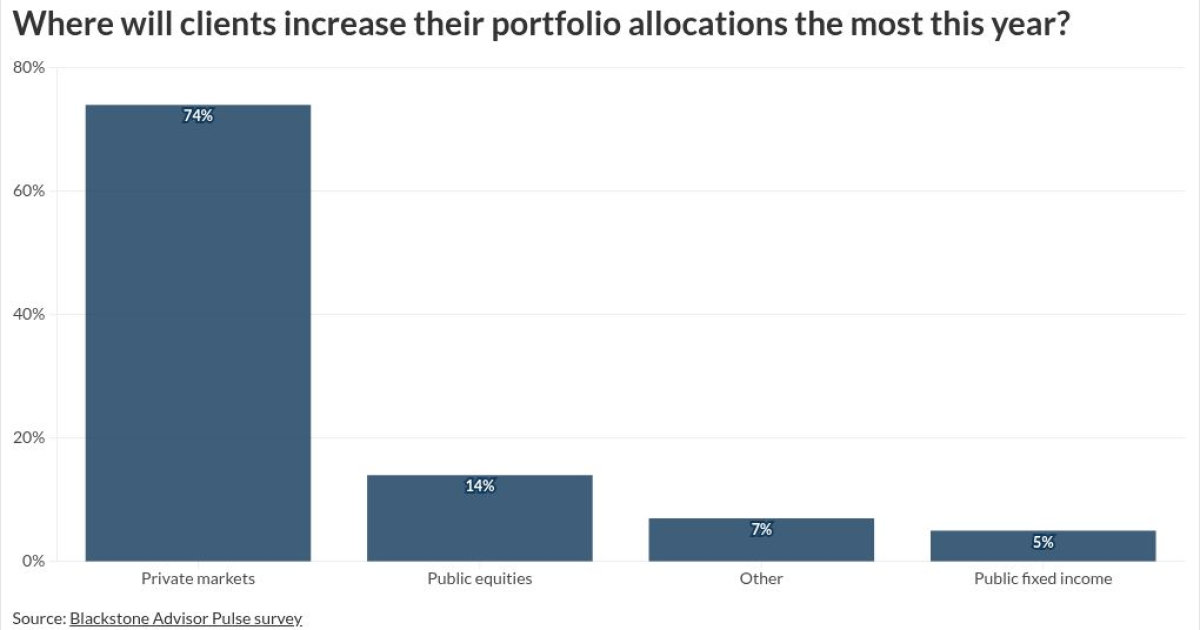
Despite warnings about the dangers of private equity, credit, and similar assets, retail investors are piling ever-larger amounts of money into them. And advisors are becoming more willing to help them do it. These trends are evident in recent reports from Robert A. Stanger and Blackstone, which highlight the increasing interest in private markets among regular investors.
According to Robert A. Stanger, retail investors invested a total of $203.7 billion in U.S. private markets in 2025, a significant increase from previous years. The largest category of investment was business development companies, which attracted $63 billion. Similarly, Blackstone’s survey results indicate that nearly three-quarters of advisors expect clients’ allocations to private markets to increase more this year than investments in public companies’ stock or fixed-income vehicles.
The appeal of private assets lies in their unique sources of returns, potential for mitigating downside risks, and access to long-term growth trends that are less influenced by daily market swings. However, critics warn that private markets come with their own set of risks, including high fees and barriers to withdrawing investments.
Despite these concerns, advisor and investor interest in private markets remains strong. Hamilton Lane reported that 86% of wealth professionals surveyed intend to increase their clients’ allocations to private markets this year. The main drivers behind this trend are the desire to improve portfolio performance and diversification.
One of the key factors contributing to the growing interest in private investments is the accessibility of these markets to a wider range of investors. Firms like Hamilton Lane have introduced innovative solutions to address liquidity concerns and make private markets more inclusive. This shift has enabled retail investors to access private equity, credit, and other alternatives that were once exclusive to large institutional investors.
Other financial institutions, such as Morgan Stanley, are also taking steps to democratize access to private markets. By reducing fees and minimum investment requirements, firms like Morgan Stanley’s EquityZen subsidiary are making private investments more accessible to retail investors. This move aligns with the industry’s goal of extending investment opportunities to a broader range of clients, including those using online brokerages like E-Trade.
However, regulatory barriers still exist for investing in private markets. Many types of private investments are restricted to accredited investors, which limits access for retail investors. Lawmakers and regulators are exploring ways to broaden access to private markets, such as the Invest Act, which calls for the creation of an examination that investors can take to qualify as accredited.
In conclusion, the growing interest in private markets among retail investors and advisors reflects a shift towards seeking alternative sources of returns and diversification. Despite the risks and challenges associated with private investments, the allure of unique opportunities and potential long-term growth trends continues to drive interest in this asset class.
The Shift Towards Open Private Markets: Opportunities and Risks
The landscape of investing is evolving, with a growing emphasis on private markets as public exchanges see a decline in the number of listed companies. This shift has sparked a debate over whether retail investors will truly benefit from this trend or if they will be left with subpar investment opportunities compared to accredited investors. The fear looms that retail investors may end up shouldering the burden of the worst private market offerings, raising concerns about transparency, risk, and overall investment quality.
Navigating the Complexities of Private Markets
As the allure of private markets grows, wealth managers and advisors are stepping up to guide their clients through the complexities of this investment landscape. Companies like Carta are paving the way by offering tools and services to help investors make informed decisions. Carta’s innovative approach involves transforming the often opaque financial data from private investment issuers into user-friendly reports and visualizations, enabling investors to assess risk-return profiles and value drivers more effectively.
Simon Tang from Carta emphasizes the importance of understanding the intricacies of individual companies in the private market and aligning investment decisions with the propositions presented by issuers. While investing in private markets may seem exciting and trendy, Tang underscores the need for due diligence and accountability to ensure long-term success in this asset class.
Benefits and Challenges of Private Market Investing
Despite the risks, advisors see numerous advantages in private markets. A survey by Blackstone revealed that 40% of respondents seek portfolio diversification amid concerns of overvalued stocks and market volatility. Hamilton Lane’s findings suggest that investors may not be fully aware of innovative strategies, such as evergreen funds, designed to mitigate liquidity risks in private markets.
Education plays a crucial role in helping investors grasp the nuances of private markets and integrate them effectively into their portfolios. Understanding the long-term nature of private market investments and their unique characteristics is essential for making informed decisions and maximizing returns.
Conclusion
As the investment landscape continues to evolve, the push towards open private markets presents both opportunities and challenges for retail investors. With the guidance of knowledgeable advisors and the support of innovative tools, investors can navigate the complexities of private markets and unlock their potential for diversification and long-term growth.
For more information on how advisors are helping investors navigate private markets, please visit here.