House Financial Services Committee Approves Community Bank Tailoring Bill
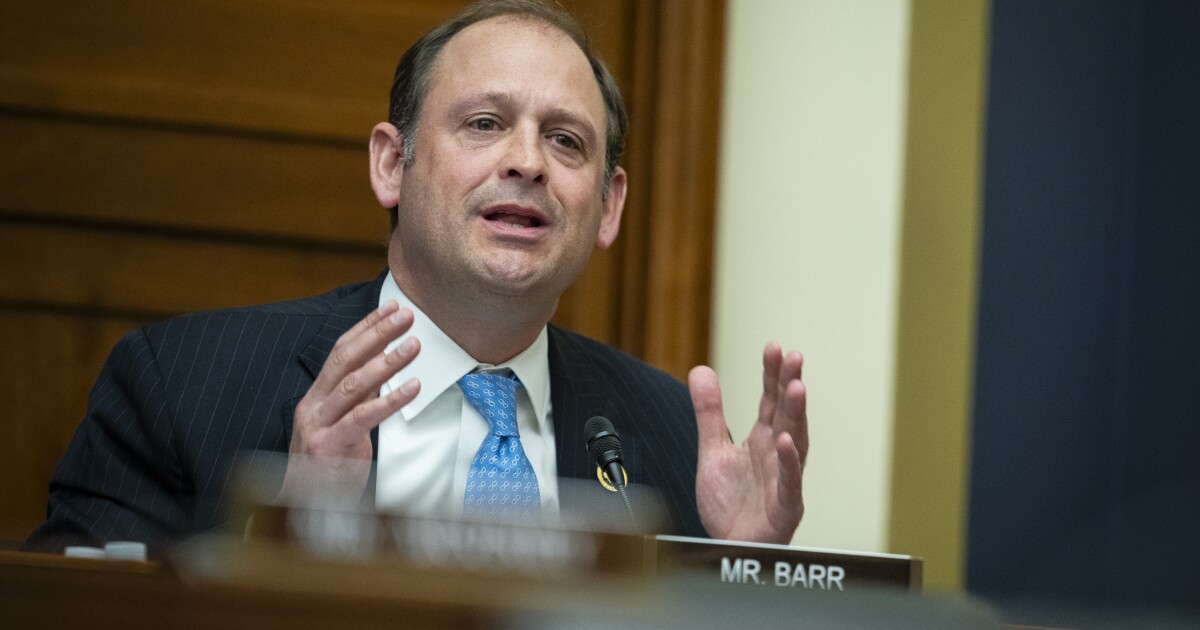
The House Financial Services Committee has given the green light to a community bank tailoring bill, aimed at altering several regulatory thresholds for community banks based on Gross Domestic Product (GDP) growth. The bill, proposed by Rep. Andy Barr, R-Ky., chairman of the panel’s subcommittee on financial institutions, was approved by the committee in a 33-21 vote. Despite this, the bill did not secure significant bipartisan support, which could influence its future trajectory.
Significance of the Bill
The proposed legislation seeks to increase many thresholds for community banks across a number of regulations, including the Bank Holding Company Act, the Community Reinvestment Act, and the Dodd-Frank Act. The bill would specifically influence areas such as capital standards, mortgage disclosures, the Volcker Rule, and executive-compensation safeguards, among others.
In a thriving economy, GDP typically grows faster than inflation. Thus, connecting these thresholds to GDP rather than inflation would result in more banks being exempt from stricter rules if the thresholds were indexed to inflation. Currently, the thresholds are not indexed to any particular measure, but the idea of linking several regulatory benchmarks to inflation is gaining traction among GOP policymakers.
Implications for Community Banks
According to Barr, who is sponsoring the bill, community banks and credit unions are being improperly classified into higher regulatory categories due to economic growth rather than their growth as institutions. This higher classification, he argues, results in burdensome compliance costs that hinder these banks’ ability to compete and serve their communities. “Institutions are improperly being pushed into a higher regulatory classification, not due to an increase in risk or complexity, but simply due to organic growth in our economy,” said Barr.
Bank Lobby’s Support and Democratic Pushback
The legislation has strong backing from the bank lobby, with the American Bankers Association (ABA) supporting the view that these thresholds, set during significantly different economic conditions, have not been updated to reflect the changes in the banking sector. However, the bill faced opposition from Democratic lawmakers, raising concerns about its future given the tightly divided Congress.
Concerns and Future Prospects
Democratic lawmakers, including Rep. Maxine Waters, D-Calif., and Rep. Stephen Lynch, D-Mass., raised concerns about the bill. They argue the bill could disproportionately affect low and moderate-income communities, communities of color, and rural communities. Lynch further pointed out the bill’s disregard for the risk profiles of banks, stating, “This bill actually is risk agnostic. In other words, we don’t care how risky people operate,” he said. “We’re going to raise these thresholds and let them take on more risk regardless of what they do, and I just think that is the wrong direction to take.”
Despite these concerns, the committee’s chairman, Rep. French Hill, R-Ark., has signaled his willingness to work with Democratic lawmakers to narrow the scope of the bill, making it something they might support. As a strong advocate for community bank deregulation, Hill has sponsored numerous bills aimed at rolling back parts of the Dodd-Frank Act. Only time will tell if this bill can garner the bipartisan support it needs to become law.
For more details, visit the source link Here